
Description
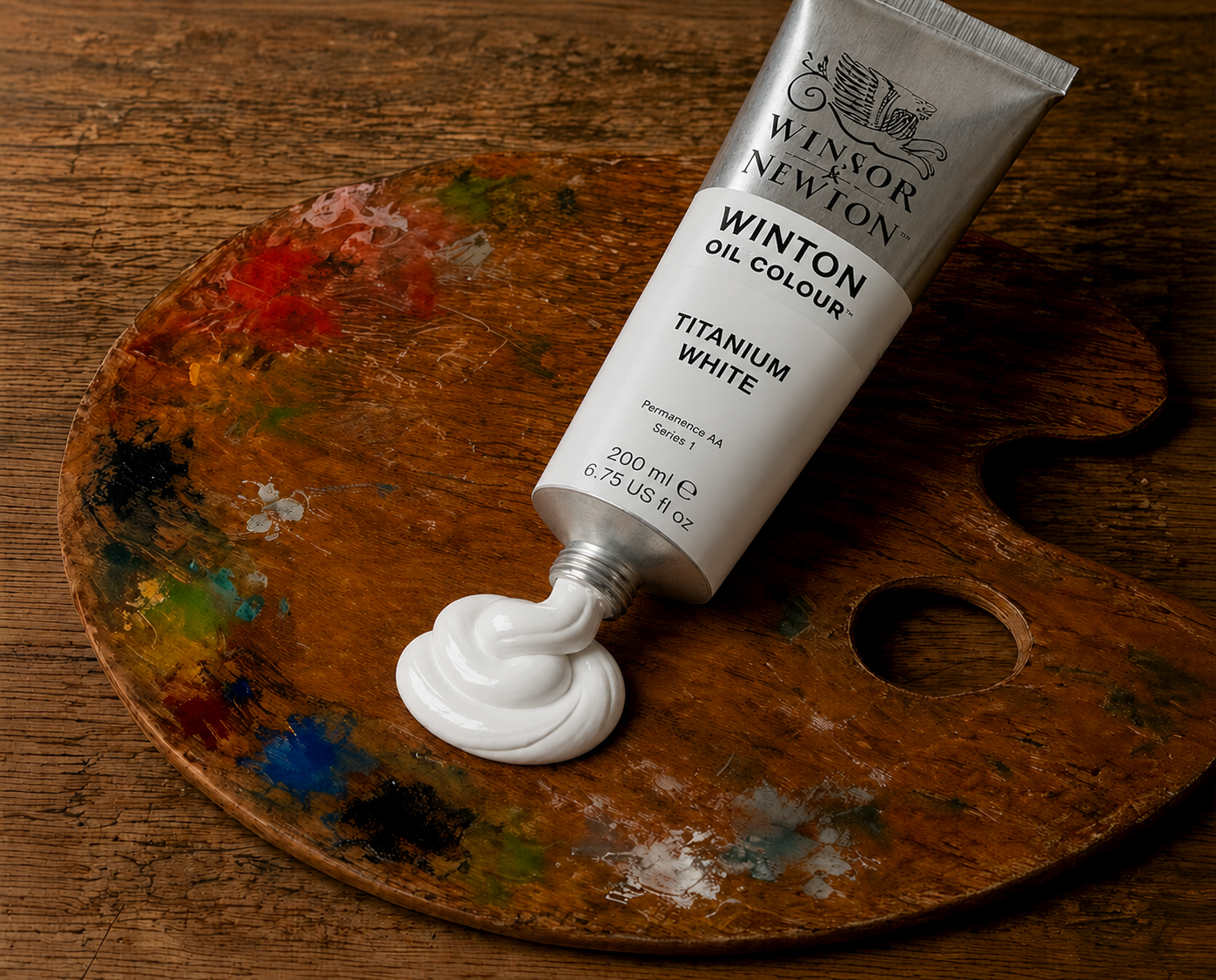
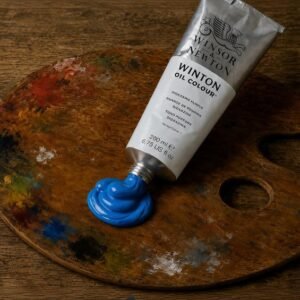
WINSOR & NEWTON’S WINTON OIL PAINT, 200ML – TITANIUM WHITE
Winton Titanium White Oil Paint (200ml) — the most opaque and highest-strength white available in oil painting, prized for its brilliant, cool-neutral tone and exceptional covering power.
Use it to lighten any colour on your palette. Build bright highlights, or create thick, textured impasto work. It holds a brushstroke or palette knife mark beautifully. A small amount goes a long way, thanks to its strong tinting power.
Titanium White dries slower than some other whites. This gives you a longer working window for wet-on-wet blending. It stays workable on the palette for hours, making it ideal for portrait and figure work where smooth transitions matter.
Pair it with Cadmium Deep Red Hue or Yellow Ochre to build soft skin tones. Mix it into any colour to create lighter tints without shifting the hue. It’s one of the most-used tubes in any working palette — most artists go through white faster than any other colour.
Winsor & Newton’s Winton range gives artists of all levels reliable colour and handling at an accessible price. It’s a solid choice whether you’re building your first palette or restocking a working studio.
Each 200ml tube offers generous coverage. Because white is used more than any other colour, consider keeping two tubes on hand.
Titanium White Oil Paint — Storage and Handling
Store the tube upright with the cap tightly closed, away from direct heat. It can last several months of regular painting. Squeeze out only what you need for a session — paint left exposed on the palette starts to skin over within a day, though this varies with humidity.
Titanium White is safe and non-toxic, unlike older lead-based whites. It’s the standard choice for most contemporary oil painters and art schools. Keep it alongside your other Winton colours for a consistent, well-matched palette across your whole studio range, from underpainting through to final highlights.
The History of Titanium White
Titanium dioxide, the compound behind titanium white, was first identified in 1821, but it took another century before it became usable as an artist’s pigment. Producing a stable, workable paint from it proved difficult, and it wasn’t until the early 1920s that manufacturers in the United States and Norway solved the technical challenges needed to bring it to market. The two companies eventually cross-licensed their patents in 1920, and titanium white oil paint reached artists shortly after.
Once available, it spread quickly. Titanium white offered far greater hiding power and tinting strength than the whites painters had relied on before, particularly lead white, which was prized for centuries but came with serious toxicity concerns. By the late 1920s, titanium white had displaced lead white as the standard choice for most painters, a position it still holds today.
The pigment’s brightness and stability also proved essential well beyond oil painting. Its chemical stability later made it a key ingredient in the development of acrylic paint in the 1950s, since older whites like lead and zinc couldn’t form a stable acrylic emulsion. Titanium white remains the most widely used white pigment in art today, valued by painters for the same qualities that made it dominant a century ago: strength, brightness, and reliability.

Reviews
There are no reviews yet.