
Description
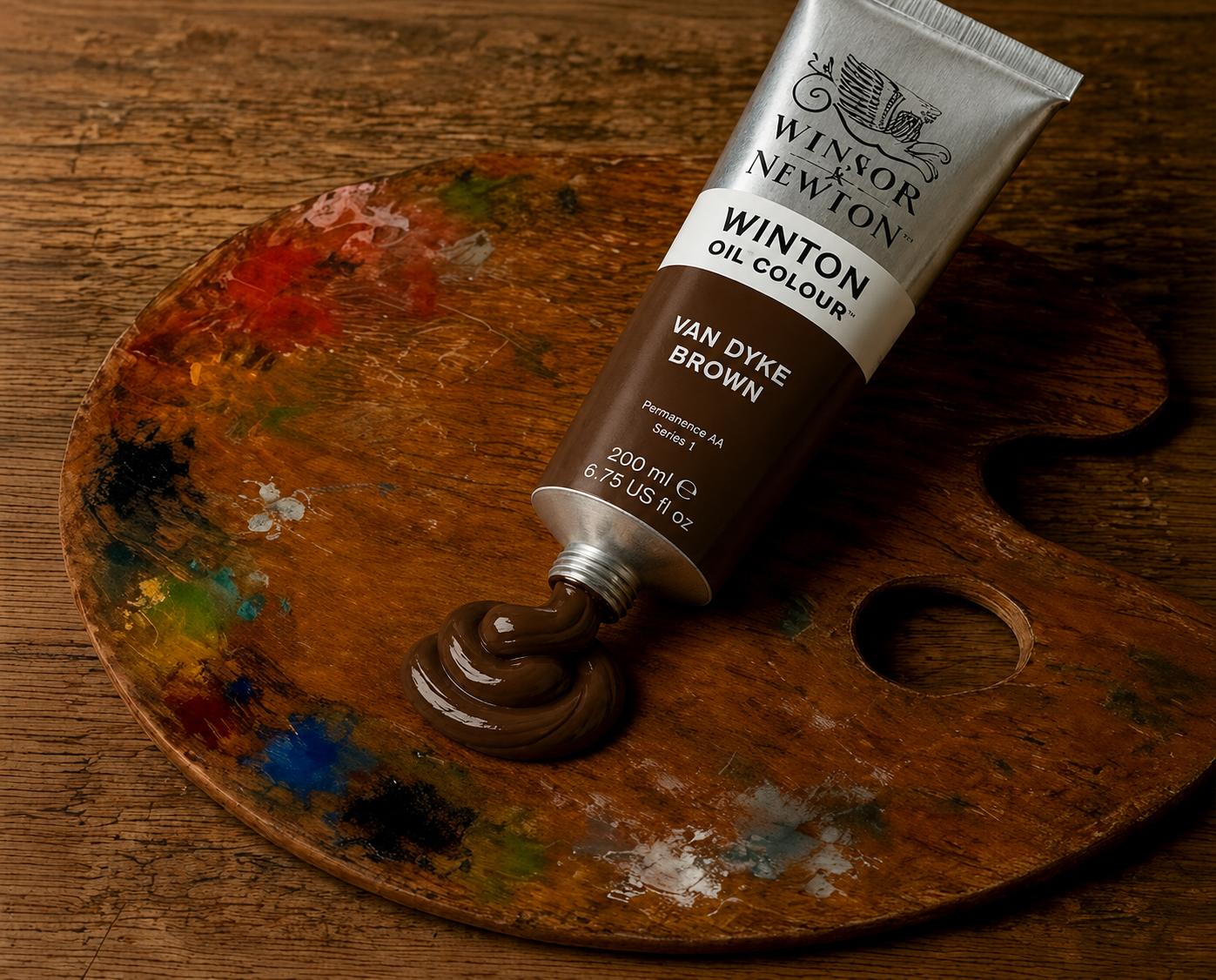
WINSOR & NEWTON’S WINTON OIL PAINT, 200ML -EARTHY VAN DYKE BROWN
Winsor & Newton Winton Premium Oil Colour, Van Dyke Brown, 200ml. A deep, rich, and transparent dark brown with excellent lightfastness. This classic earth colour is perfect for rich shadows, dark landscapes, tree trunks, old master-style painting, and creating warm, moody atmospheres. Ideal for glazing and building depth in your work.
This colour’s transparency makes it a natural choice for glazing over an existing underpainting, deepening shadows or shifting the mood of a passage without losing what’s beneath it. Its warm, earthy depth also makes it well suited to painting bark, soil, aged wood, and shadowed interiors.
Pair it with Cadmium Deep Red Hue for rich, warm darks, or mix it with a touch of Titanium White for soft, warm greys. Combined with Yellow Ochre, it builds convincing aged wood and autumn foliage tones.
The History of Van Dyke Brown
Van Dyke Brown takes its name from the Flemish painter Anthony van Dyck, who used the colour extensively for shadows, drapery, and backgrounds in his 17th-century portraits, though later technical analysis of his actual paintings hasn’t confirmed he used this specific pigment himself. The genuine pigment, also known as Cassel Earth or Cologne Earth, is a natural material drawn from organic-rich soil and peat deposits near Cologne, Germany, prized for centuries by artists including Rembrandt and Rubens for its deep, transparent, atmospheric darks.
There’s an honest complication in this colour’s history, though: the genuine, traditional pigment has always suffered from poor lightfastness, fading and shifting in tone when exposed to light over time — a real problem for a colour so beloved for exactly the rich darkness it can’t reliably hold onto. By the late 19th century, conservators and manufacturers had begun replacing the organic version with more stable synthetic mixtures, typically iron oxides combined with black pigments, engineered to match its warm, transparent character while actually staying put.
That’s exactly what a modern “Van Dyke Brown” like this one is: a synthetic hue formulated to capture the warmth and transparency artists have valued in this colour for centuries, built with genuinely lightfast modern pigments rather than the historically unstable original. You get the atmosphere old masters were reaching for, without their paintings’ well-documented fading problem.
Winsor & Newton’s Winton range gives artists of all levels reliable colour and handling at an accessible price. It’s a solid choice whether you’re building your first palette or restocking a working studio.
Van Dyke Brown works especially well in portrait work, where it can be used to build soft, warm shadows in hair and clothing without the flatness a pure black would bring. In landscape painting, Van Dyke Brown brings a natural, believable depth to tree bark, turned soil, and shaded undergrowth — the kind of warm dark that a cooler black or grey struggles to match.
Many painters keep Van Dyke Brown on hand specifically for underpainting, using it thinned with solvent to block in an entire composition’s tonal structure before introducing colour. Because it’s transparent, these early layers stay visible and active even once colour is built up on top, adding warmth and depth from beneath rather than disappearing under later layers. This makes Van Dyke Brown a genuinely versatile staple, equally at home in a beginner’s first palette or a working studio’s daily rotation.
Van Dyke Brown Oil Paint — Storage and Handling
Store the tube upright with the cap tightly closed, away from direct heat, and it can last several months of regular painting. Squeeze out only what you need for a session — paint left exposed on the palette starts to skin over within a day, though this varies with humidity.

Reviews
There are no reviews yet.